

Rainwater Tanks For Uganda
Clean water. Real change.
Be the reason a family never has to walk up to 8 kilometres every day just to fetch water.
In partnership with the Centre for Community Solidarity (Uganda) and Lorraine Borrmeister, we’ve launched a grassroots initiative bringing clean, safe water directly to families—one household rainwater tank at a time.

For just NZD $490, you can change a family’s future - forever!
No middlemen. No admin fees.
Just 100% direct, measurable impact.
“A heartfelt thank you to everyone who has already sponsored a tank
and to those about to make a life-changing impact.”
Meet the family’s you’re walking alongside
FAQ
-
Empowering Isingiro’s Families with Clean Water
At Borrmeister Architects, we are proud to partner with the Centre for Community Solidarity (CCS) to help tackle the urgent water crisis in Isingiro, Uganda. Working hand in hand with local communities, CCS goes to great lengths to identify the most vulnerable families—those for whom access to clean water is truly life-changing.
Our shared mission is simple yet profound: to provide clean, safe, and sustainable water—one rainwater tank at a time.
This initiative not only delivers immediate access to clean water but also builds long-term resilience. Together, we are supporting families to live healthier, more empowered lives and break free from the cycle of waterborne illness and poverty.
-
In Uganda’s remote Isingiro District, access to safe water is anything but certain.
With 79% of households lacking clean water, daily life is shaped by drought, poverty, and broken infrastructure.Women and children often walk 3–8 km every day to collect water—water that’s frequently unsafe to drink.
This daily burden fuels a silent emergency.
Waterborne illnesses like diarrhoea are still among the leading causes of death for children under five—tragically common, yet largely preventable.In southwestern Uganda, dry seasons make things worse. Underground sources are often too salty. Protected springs are far away. Most families rely on unprotected catchments easily polluted by runoff and rain.
And the consequences go far beyond health:
Girls miss school to fetch water, limiting their future and exposing them to risk.
Women lose time they could spend earning income or supporting their families.
Entire communities are held back by the absence of something so basic: clean, safe water.
-
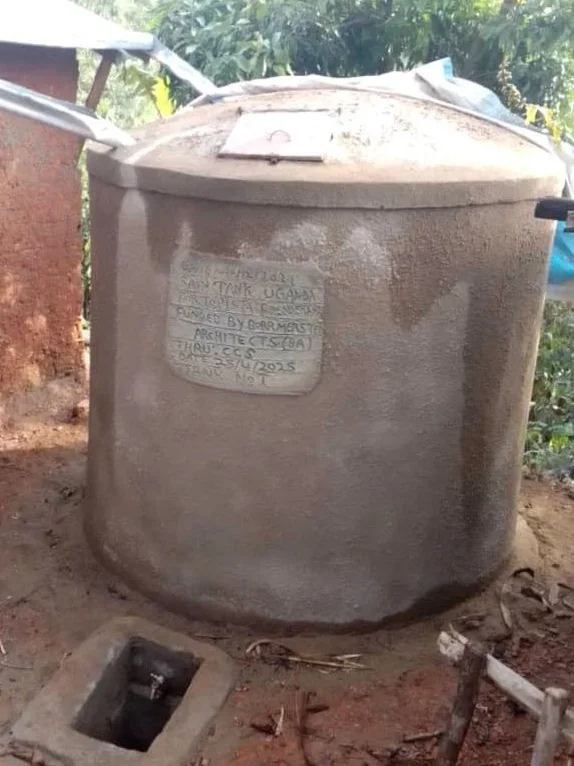
In partnership with CCS, Borrmeister Architects is co-funding the construction of rainwater tanks for families in Isingiro. Each tank is part of a sustainable solution built through local partnerships, with costs shared equally between the sponsoring organisation and the family.
-
Supports Education & Safety
Girls no longer need to walk long distances for water, enabling them to attend school and reducing their exposure to danger.Promotes Self-Reliance
Families manage their own water supply, increasing independence and dignity.Improves Health & Hygiene
Safe water drastically reduces the spread of waterborne illnesses.Builds Climate Resilience
Rainwater harvesting provides a sustainable, year-round water source, even during droughts.Reduces Poverty
With water nearby, families can focus on farming and other income-generating activities.
This project is about more than just clean water—it’s about hope, dignity, and long-term empowerment.
-
In New Zealand, turning on a tap is effortless, yet in Isingiro, Uganda, many families face the daily challenge of accessing clean water. The 'Rainwater Tanks for Uganda' project offers a practical, affordable, and sustainable way to bring about change.
Borrmeister Architects support this project because we believe good design is not just about buildings—it’s about improving lives. This initiative reflects our core values of empowering communities, supporting practical solutions, and making a lasting positive impact.
By building one tank at a time, we’re helping families transform their lives and thrive.
-
Community-Centered Construction
Community is at the heart of this project. Local masons collaborate with families and neighbours to construct each tank, using materials sourced from nearby shops. Many materials, like sand, cement, and welded mesh, are carried by hand from feeder roads over 500 metres away, demonstrating the remarkable commitment and unity of the community.How It Works
Rainwater is collected from rooftops through gutter systems and stored in reinforced concrete tanks. This simple yet effective system provides families with clean, safe water all year round, reducing their reliance on contaminated sources.Fast to Build
Once materials are on-site, each tank takes just seven days to complete, providing families with quick access to life-changing water.Made to Last
The tanks are built from reinforced concrete, designed to be durable and low-maintenance, ensuring they serve families for many years. -
Our partnership with CCS is built on shared values of sustainable development and a commitment to creating meaningful change. Lorraine Borrmeister has worked closely with Charles Rwabambari, CCS’s Project Coordinator, during her time as an International Programmes Officer. To formalize this collaboration, we have established a Memorandum of Understanding (MoU) and a Funding Agreement to ensure transparency and mutual accountability for the success of the project.
-
CCS will always obtain explicit, informed consent from sponsored families before capturing or sharing their names, images, videos, or personal stories.
All consent forms and media will be securely stored by CCS to protect the privacy of families.
We are committed to promptly honouring any requests from families to remove media content.
Sponsors agree, as part of the Terms & Conditions, to use all media respectfully, ensuring the privacy, dignity, and well-being of the families they support.
-
Rainwater Harvesting Tank Costs (10,000L Capacity)
Total Cost per Tank: NZD 870
How the cost is shared:
Ugandan Family Contribution (50%): NZD 380
Sponsor Contribution (50%): NZD 380
Sponsor Contribution to CCS (Admin Support): NZD 110
Other Costs:
Repairing an Existing Tank: NZD 280
Borrmeister Architects’ Contribution to CCS (Travel Support): NZD 30 (Not included in tank price)
About the NZD 110 Administration Support Fee:
This contribution goes directly to the Centre for Community Solidarity (CCS) in Uganda. It funds essential on-the-ground work, including:Finding and supporting the most vulnerable families
Sourcing and organising materials for tanks
Coordinating administration and logistics
Delivering materials to each location
Supervising construction
Important: Borrmeister Architects does not profit from this. All funds go directly to CCS to make this work possible.
-
If you're happy to contribute NZD 490.00 to help a family in Isingiro, Uganda, build a rainwater tank, here’s how to get started—it’s simple:
Get in Touch
Reach out to Wulf, Lorraine, or Charles—we’ll send you a short Funding Agreement and MoU to ensure everything is clear and transparent.Make Your Contribution
Once everything’s signed, we’ll guide you through the simple steps to transfer your donation directly to CCS in Uganda.See Your Impact
Charles will keep you updated with photos and stories from the family you’re supporting—so you can see firsthand the difference you’re making.
If you have any questions or just want to chat about the project, we’re always happy to connect. This isn’t a fundraiser—it’s a direct act of kindness—no middleman, just real impact.
-
Follow our journey and progress on the Borrmeister Architects website and social media. Stay updated with photos and short videos from CCS, the families we’re supporting, and the wider community of Isingiro.
Regular updates on the 'Rainwater Tanks for Uganda' project will be shared as we continue to make a difference, one tank at a time.
-
Wulf and Lorraine Borrmeister
info@borrmeister.co.nz
+64 3 384 0946Project Coordinator: Charles Rwabambari
crwabambari@yahoo.com
+256 772 698 296
Just a heads-up: this isn’t a registered charity—just a bunch of us at Borrmeister Architects doing our bit to make a difference. This is a direct act of kindness—no middleman, just real impact.

Centre for Community Solidarity (CCS)
The Centre for Community Solidarity (CCS) is a community-led NGO in rural Isingiro District, near Uganda’s Tanzania border. Since 2001, CCS has partnered with families to support orphans and vulnerable children by building caregiver skills, improving incomes, and promoting self-reliance. Led by Project Coordinator Charles Rwabambari and Project Supervisor Gilbert Mugabe, CCS delivers practical, grassroots initiatives like rainwater harvesting, hygiene and farming training, and youth-led piggery and rabbit farming—focused on empowerment, sustainability, and community wellbeing.
Charles Rwabambari (Left)
Programme Coordinator
Charles is a dedicated rural development leader with 30+ years’ experience in agriculture, water, and sanitation. With a background in Agriculture and Water Engineering, he has led projects that improve food security, rainwater harvesting, and women’s empowerment. He has collaborated with partners like Bread for the World and the Department for International Development, working alongside local leaders and international allies to drive community-led change.

Gilbert Mugabe Rwabambari (Right)
Project Supervisor
Gilbert is an experienced IT professional with a degree in Computer Science and 15+ years supporting rural development. At CCS, he manages project operations and community outreach, using his networking and training skills to improve project delivery and impact. Passionate about youth empowerment, Gilbert mentors university interns and helps local communities access practical, sustainable solutions.
UGANDA
Population:
As of 2025, Uganda's population is approximately 51.3 million, reflecting a 2.72% increase from 2024.
Area:
The country covers approximately 241,038 square kilometres.
Capital City:
Kampala, located in the southern part of the country near Lake Victoria, is Uganda's capital and largest city.

ISINGIRO
Isingiro District:
Isingiro District is located in western Uganda, bordered by Mbarara to the northwest, Ntungamo to the west, Kiruhura to the north, Rakai to the east, and Tanzania to the south.
Home to Major Refugee Settlements:
The district is home to major refugee settlements, including Nakivale and Oruchinga, which were established in the 1950s. These settlements house refugees from Rwanda, the DRC, and Burundi, making up nearly 19% of the population and underscoring Isingiro’s humanitarian significance.
Agricultural Hub:
Isingiro is also an agricultural hub, with fertile plains that support a largely agrarian economy. Around 70% of the rural population depends on banana cultivation as their main source of income.